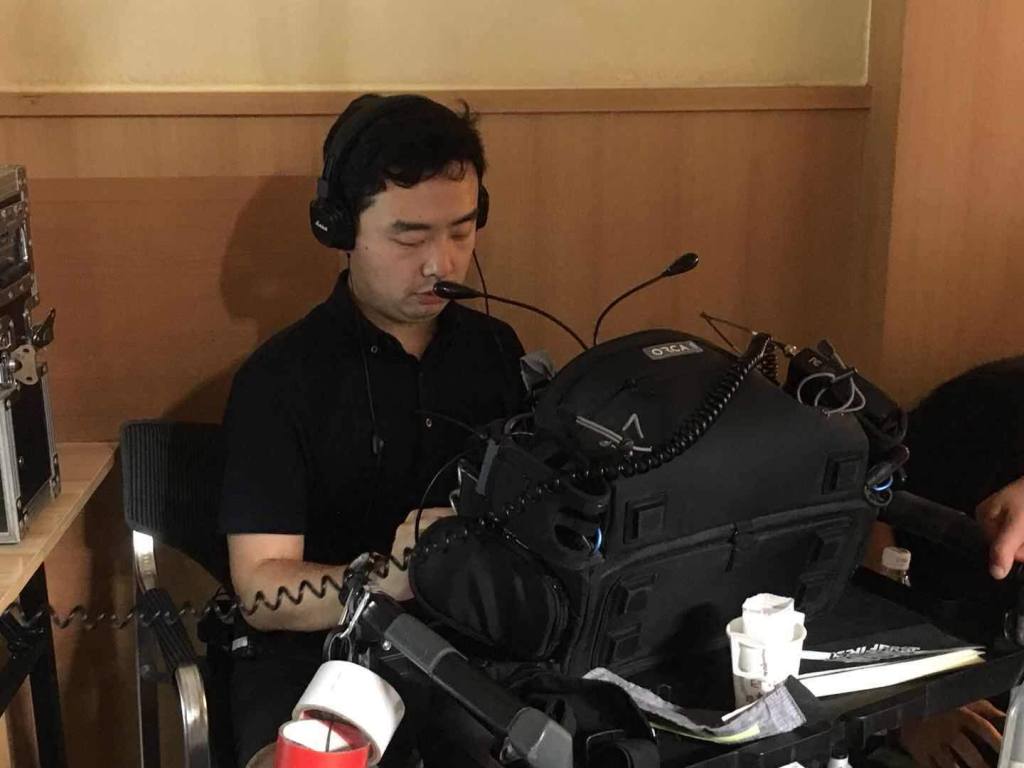
Preparation, Proximity, and Adaptability: My Production Sound Philosophy for Documentary Filmmaking
Before any complex shoot, a sound recordist must collaborate with the director and the cinematographer to analyze the scene ahead: Who is the primary subject? When is it happening? What are they doing? Based on this, we plan our setup in advance—deciding which microphones or lenses to use, who needs to be mic’d up, and whether to go handheld or stick to a tripod. Yet, the field is always full of variables. Only when you have a clear blueprint in mind can you truly adapt on the fly.
For instance, prior to shooting in an unpredictable and dynamic environment—like a scene with children running around a sports court—we need to thoroughly understand the kids’ daily routine and movement patterns. We scout the actual location with them, walking through the blocking while filming, so we can establish a solid plan right on-site.
In my view, most production sound issues encountered on documentary sets can be understood through a spin-off of legendary photographer Robert Capa’s famous quote: “If your sound isn’t good enough, you’re not close enough.” Finding every possible way to get the microphone closer to your subject (without literally shoving it in their face, of course) can solve 90% of your problems.
If the shooting perimeter is tight or if you can shadow the subject closely, a shotgun mic is ideal; it captures crystal-clear dialogue while retaining just the right amount of ambient texture, making the soundstage feel more three-dimensional. However, if the subject’s range of motion is too wide, or if external constraints force you to keep your distance, utilizing wireless lavaliers becomes essential—and often, the only viable option.
Furthermore, during structured events like meetings, rehearsals, or live performances, I always dedicate a separate track or a backup recorder to capture an uninterrupted, full-length ambient feed of the space. This provides the post-production team with significantly more flexibility and options during the mix.
In practice, there are three golden rules to keep in mind: Steer Clear of Noise, Master the “Plant Mic,” and Never Stop Monitoring.
When shooting crucial dialogue or interviews, always scout the area in advance to identify and mitigate noise pollution, such as public PA systems, background music, construction work, or general commotion.
In scenarios where you cannot get close to the subjects and wearing a wireless body mic is out of the question, you can get creative with plant mics—hiding wireless transmitters directly within the environment where the dialogue takes place. A pen holder in a conference room, a tissue box on a dining table, a stack of books on an office desk, or the sun visor in a car—these are all among my go-to microphone hiding spots.
On set, I keep my headphones on at all absolutely times to ensure I never miss a beat—whether it’s an unexpected character entering the frame, a sudden burst of vital dialogue, or an impromptu event. If an issue arises, such as a sudden spike in ambient noise, RF interference, a power drop, or a loose mic, I can catch it instantly and rectify it on the spot.
I also frequently set up a wireless monitoring feed (IFB/Comms) for the camera crew, encouraging them to keep an ear on the audio while framing their shots. This fosters seamless cross-departmental communication and allows camera operators to stay attuned to cues and context occurring outside their immediate field of view.
