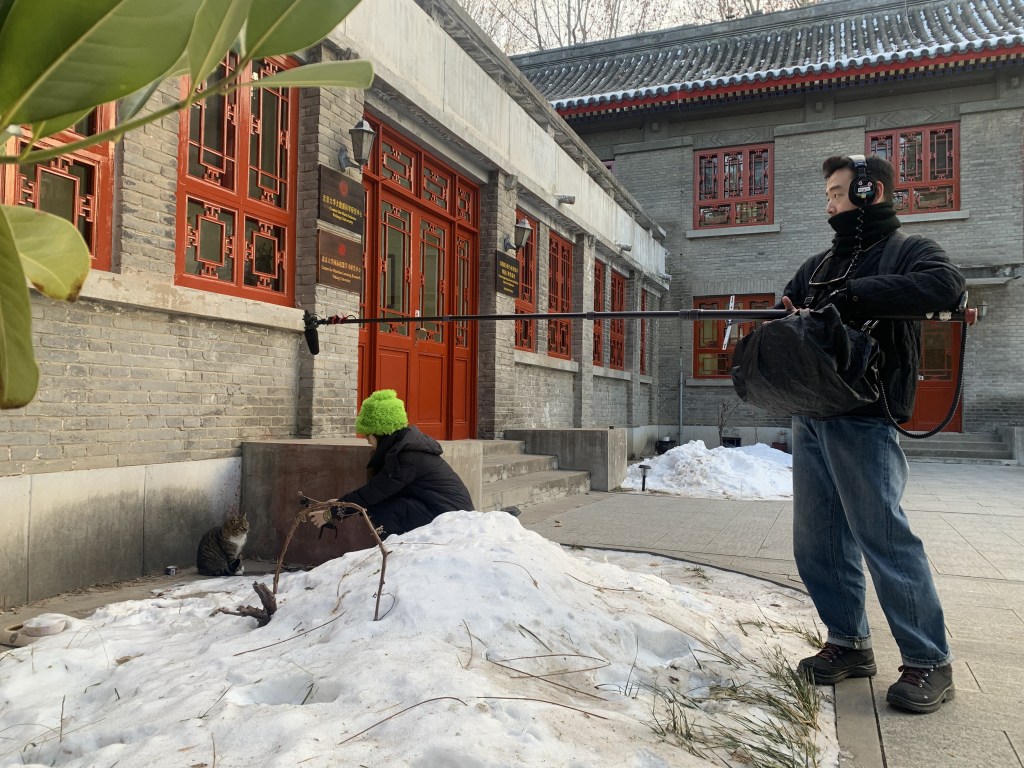
Field Recording: How to Mitigate the Impact of Ambient Noise?
Ambient noise is the most common source of interference in documentary filmmaking. Among these, wind and electrical noise are the two culprits that constantly plague sound recordists on set.
Wind is notoriously unpredictable, and severe wind buffetings are incredibly difficult to clean up in post-production. Whether you are shooting indoors or outdoors, choosing the right wind protection for your microphones—such as foam windscreens, blimps, or faux-fur windjammers—is absolutely essential. Even the capsules of wireless lavalier mics require proper wind protection. When you find yourself without the proper accessories on hand, clothing with loose weaves and long fibers—such as wool scarves, beanies, or knit gloves—can serve as excellent improvised substitutes.
Another effective technique is to use the human body as a physical windshield. When holding a boom pole, position your back against the oncoming wind, or have your subject stand with their back to the wind. A minor adjustment in positioning can create an effective acoustic shadow and make a massive difference.
Electrical and motorized noise are ubiquitous, whether indoors (freezers, HVAC systems, large electronic equipment, mall background music) or outdoors (AC condenser units, construction sites, loud public square dancing, blaring storefront speakers, or frequent flight paths). When scouting and selecting locations where a heavy amount of dialogue will take place, sound requirements must be factored into the decision-making process well in advance.
When all technical interventions fail, you need to quickly evaluate the situation: How severely does this noise compromise the actual content? Will there be similar shooting opportunities later to cover this? Based on your assessment, have a brief, immediate huddle with the director to pitch your solutions. This not only addresses the issue but also helps reassure or alert the rest of the crew. If the environment ultimately cannot be changed, do not let anxiety take over. Stay focused on the shoot at hand, and keep an eye out for a window of opportunity to pivot.
